
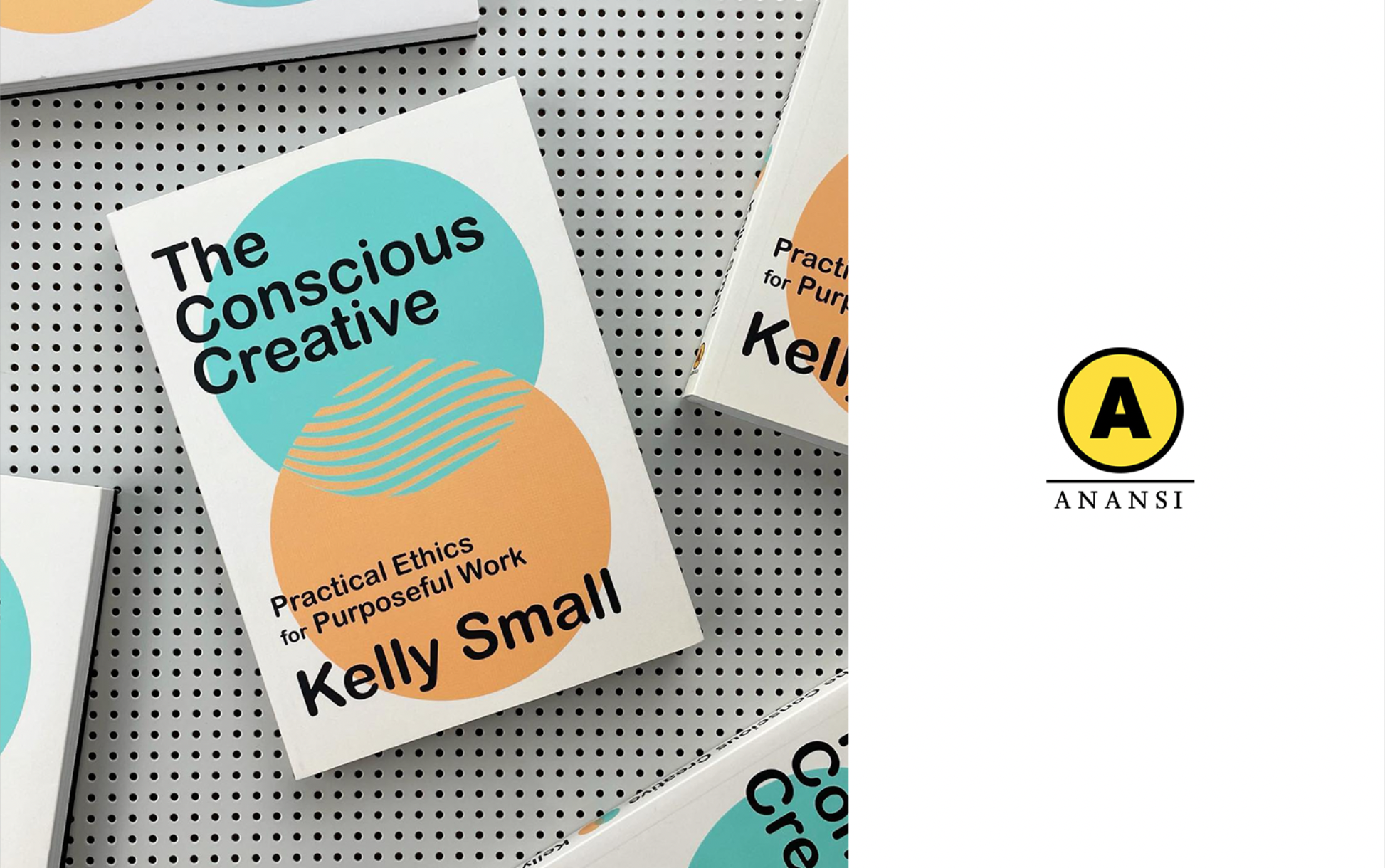
Six Years Later: The Future of Creative is still Conscious.
It has been six years since The Conscious Creative was published.
I wrote the book from a period of ethical reckoning.
I was inside the industry. Creative director at a global agency. Major commercial clients. Some recent award wins. It sounded good, but I was struggling. There was a gap between the values tucked away on about pages and the work we actually did. I felt it in my gut that something wasn’t right.
There were the overt issues. The client whose sunscreen that burned people’s skin. The toxic makeup brand. The big box store whose factory collapsed on its workers. Then there were the more insidious things. The homogenous rooms of executives. The extractive selling techniques. The belonging problem for people who didn’t fit dominant culture. And of course, our raison d'être, inventing desire in audiences so people wanted more of what they didn’t need.
The problem was not isolated to one project or one agency or client. It was structural. It was embedded in how the work was made, success was measured, and how little space there was to question any of it once the wheels of the machine started churning out work.
The Conscious Creative came out of that tension. I needed to understand what responsibility looked like in a field designed to persuade. Was ethical work even possible under capitalism?
The premise of the book is uncomplicated. Achieving ethical creative work is an ongoing practice of incremental, positive change.
It’s six years later and we’ve seen massive technological and geopolitical change. I’d argue that the practice of ethics is more important than ever, however challenging this work can be.
Creative work never happens in perfect conditions. It happens within condensed timelines, reduced budgets, and systems that reward speed over care and reflection. It happens in organizations with competing priorities, and in relationships where values are not always aligned.
There is often a gap between what we know the world needs and what we are actually able to achieve. I believe that gap is where the work actually exists.
It is easy to agree with the principles of The Conscious Creative. We should interrogate power, question default narratives, and design with communities rather than for them. The challenge is applying those ideas when there is pressure to move fast, throw nuance in the trash, and resolve tension before it’s been properly understood.
This is where ethical creative practice becomes about confident, ongoing decision making.
There are real constraints to ethical practice. Financial pressure is one of them. The need to sustain the business, pay people fairly, and secure future work all influence what is possible at any given ethical decision point. Like my meditation teacher guiding us, “use it” to the chorus of Toronto traffic outside the window, the pressures and challenges are never separate from the work.
To me, the question has never been about what the most ethical outcome would be in theory. The question is what the most responsible choice is within the conditions that exist.
This requires good judgement.
It can mean advocating for more time or more care in a process that is already constrained. It can mean shifting language or representation in ways that are incremental rather than transformative. It can mean taking on work that is not fully aligned and finding ways to move it in a better direction from the inside. These choices are not always visible. They do not always result in work that feels resolved. But they are part of the practice.
May this be as relieving to you as it was to me: there is no such thing as perfectly ethical work.
So much of work in pursuit of improved futures happens in small moments and micro decisions. A line of copy that is rewritten because it reinforces an assumption that does not hold. A question raised about who is represented and who is missing. A decision to include a perspective that might otherwise have been overlooked. A pause in the process to reconsider something that feels misaligned.
Individually, these actions might appear minor. Over time, they accumulate. And en masse, we can make massive change.
For all of us, there will be projects where the work aligns with the values that guide it. And sometimes, compromises are made and the outcome is not as considered as it could have been. This tension is not something that can be fully resolved. But it is something we can recognize and learn from.
The industry is seeing forward movement, but progress is rarely linear.
There is more awareness about representation, accessibility, and imbalances of power. More clients are asking purposeful questions earlier in the process. There is increased attention to how stories are sourced and whose experiences are centred. These shifts aren’t consistent or even, but they are happening.
What remains true is that these positive shifts are usually the result of consistent effort over time rather than a single moment of transformative change. What feels true is that ethical creative work cannot be separated from the conditions in which it’s made. It requires attention to the work itself and the systems that shape it. Ethical practice is in our daily decisions, the questions we ask, and our willingness to trust ourselves when something feels off and to respond to that discomfort with care.

CARE Canada names Intents & Purposes as Creative Agency of Record
Original press release posted by CARE Canada.
CARE Canada has selected Intents & Purposes as its Creative Agency of Record following a national search. Beginning in 2026, the partnership will focus on evolving CARE Canada’s brand, including a brand refresh, identity strategy, and ongoing creative support.
Led by founder and Principal Creative Director Kelly Small, with strategic leadership from Tina Fernandez, Intents & Purposes brings a senior, purpose-driven approach grounded in strategic insight, ethical rigour, and craft-forward creative. The work will support CARE Canada in strengthening its connection with audiences across the country and expanding its impact.
“CARE’s work supporting women and communities around the world to build a more just and equal future is some of the most important work happening today,” says Kelly Small. “We’re honoured to partner with the CARE Canada team at this pivotal moment, evolving the brand to deepen connection, strengthen relevance, and expand impact across Canada.”
As a leading Canadian humanitarian organization, CARE Canada is committed to advancing the leadership, rights, and economic empowerment of women and girls globally. This partnership reflects a shared commitment to ethical, accurate storytelling that centres lived experience.
“Ethical storytelling is not just about sharing a story. It’s about ensuring the voices of participants are heard accurately, first-hand, and without bias,” says Rebecca Davies, Chief Revenue and Marketing Officer at CARE Canada. “By highlighting real lived experiences, we can connect people through shared struggle, shared joy, and the stories shaping our collective future.”
Work will begin rolling out across 2026 and 2027.
Community love: RGD Trailblazer Award
We’re thrilled to sponsor the RGD Trailblazer Award this year.
The award recognizes emerging student designers from underrepresented and marginalized communities. We’re excited to see work from fresh perspectives that pushes against the status quo of creative that takes more than it gives.
This is the stuff we love.
We believe the future of creative is conscious. It’ll be defined by who gets a seat at the table and how deliberately we navigate the responsibility that comes with the creative influence we hold.
However slowly, we’re optimistic about the direction advertising is headed in. We see hope in student portfolios, the growth of purpose categories at awards shows, and in conversations with creative folks who are tired of selling excess.
Don’t get us wrong, there’s a lot of room to improve. Clean Creatives’ F-List gives us plenty of evidence. But we’ve always believed in the power of incremental change at scale.
There are a lot of us committed to doing this job in less harmful ways. Supporting the Trailblazer Award is one way we’ll invest in the future we want to see.
We can’t wait to see the work, the thinking, and the students shaping what comes next.